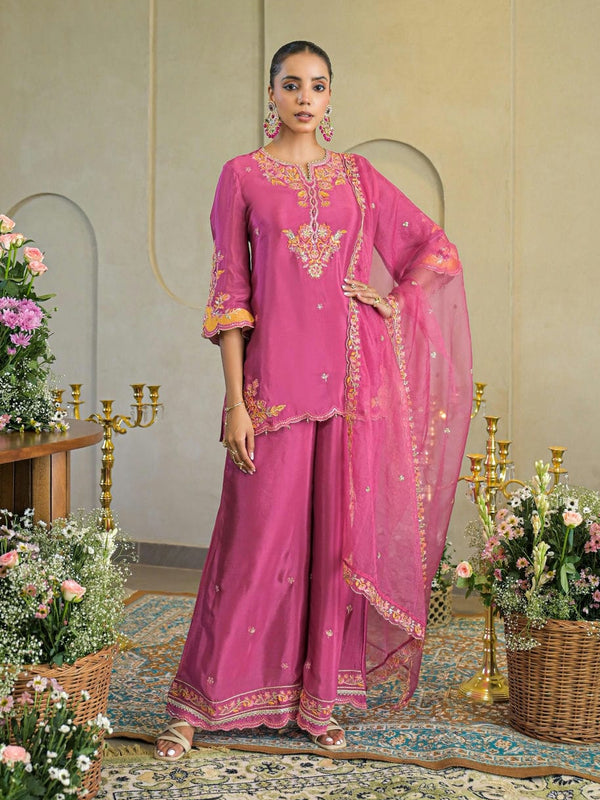
A printed satin silk saree and a Kalamkari-print saree are not simply two names for the same thing. The first highlights a textile finish and print, while the second emphasizes a design language that can appear on different materials. When shopping for an Indian wedding, festive lunch or formal gathering, comparing composition, drape and blouse information will tell you far more than choosing by pattern alone.
Quick answer: When choosing printed satin silk saree, compare silhouette and construction first, then colour, decoration, event comfort and exactly what the product includes. A photographed outfit may show accessories that are not part of the order. Prices and available variants can change.
How to choose printed satin silk saree without guesswork
The most useful search is not always the broadest one. Begin by naming the garment form, deciding whether the event is daytime or evening, and identifying what you are unwilling to compromise on: a manageable hem, a particular neckline, a familiar fabric, or a colour that works with accessories you own. Then use the product details to confirm the exact set of pieces. A style term can be interpreted differently across labels, so measurement tables and specific descriptions matter more than a fashionable category name.
10 ClothsVilla pieces to compare while planning this look
The following product photographs and direct listings are selected from recently added ClothsVilla items that Shopify showed as available for sale at the time of this article’s preparation. This does not independently certify physical warehouse quantity where inventory tracking is disabled. Use the live product page for the currently available size, price, materials and included items.
Fabric and print describe different things
Satin refers to a weave or finish associated with sheen, while Kalamkari describes a design tradition or print inspiration. Not every satin-labeled saree is pure silk; not every Kalamkari-style pattern is hand-painted. A listing that specifically describes polyester Kalamkari print should not be presented as a hand-created silk textile. Read the stated material composition and production notes. Accurate textile information is more important to a purchase than a broad visual resemblance.


Motif scale changes the effect
Large floral or figurative patterns can remain visible in full-length photographs, whereas small repeating prints may merge into a colour texture from a distance. Look at the pallu, border and body separately. A vivid pallu can become the focal point when draped over the shoulder. More restrained prints leave room for a prominent blouse or jewellery choice. Compare draped imagery with fabric close-ups rather than deciding from an isolated print swatch.


Drape and finish matter
A shiny satin-finish surface reflects light differently from a matte printed material. The way folds catch light can change the look in photographs. Polyester, silk and mixed fabrics do not necessarily hang or feel alike. Confirm whether a blouse piece is supplied and what stitching is required. Do not assume that a saree purchase includes a ready-to-wear blouse. Consider the petticoat colour and hemming arrangements as part of the full outfit.


Choose based on the event and comfort
A printed saree can be appropriate for daytime functions, festive lunches and evening gatherings depending on colour, accessories and styling. A darker design may appear more formal; a pale multicolour print can read more relaxed. Neither choice is universal. Consider how long the saree will be worn, whether you are comfortable maintaining the drape and what footwear you plan to use. An outfit that stays comfortable will photograph better through a long event.


Blouse and jewellery combinations
Choose a blouse colour already found in the border or pallu for coordination, or use a measured contrast. A complex Kalamkari-style motif often needs fewer large decorative pieces, while a simpler printed satin-style saree may support a distinctive earring or necklace. These are starting points, not rules. Before tailoring, check the exact blouse fabric and dimensions supplied with the purchase.


Care instructions are product specific
Printed fabric care depends on its fibre, dyes and decoration. Follow the exact garment label rather than assuming that all silk-look or Kalamkari-style sarees require the same cleaning method. Verify the live variant, images, length and seller’s product description. A clear understanding of materials helps prevent both styling disappointment and avoidable care mistakes.
Comparison worksheet: decide before checkout
If you are comparing several designs, use the same questions for every listing. This prevents a highly styled photograph from outweighing information that affects comfort, fit and cost. Save the candidate URLs and compare the details alongside the event invitation and your footwear. Do not substitute a generic fashion rule for the requirements of your ceremony.
| Decision point | What to check | Why it matters |
|---|---|---|
| Cut and length | Full-length images, silhouette, garment length | Influences movement, photographs and footwear |
| Fabric and lining | Material and component descriptions | Affects drape, coverage and care |
| Work and colour | Close-ups, base colour, reflective details | Changes styling and lighting impact |
| Fit and tailoring | Available variants, measurements, stitching status | Prevents last-minute alterations |
| Included pieces | Blouse, bottom, dupatta and other stated components | Makes price comparison fair |
| Event readiness | Delivery terms, cleaning needs and exchange policy | Supports a realistic wedding timeline |
Practical outfit planning, step by step
- Define the exact event: note the venue surface, time of day, expected dress code and whether dancing or floor seating is likely.
- Decide how it must feel: prioritize the waist, shoulders, hem and the ability to move without holding the outfit in place.
- Compare the actual set: verify fabrics, lining, blouse stitching, dupatta inclusion and decorative placement for every shortlisted item.
- Build a simple accessory plan: repeat one existing metal or colour and choose footwear based on hem length.
- Leave time for fitting: allow for any tailoring or steaming before a fixed event date.
- Confirm the current listing: review the exact variant, availability, price, shipping and store policies before checkout.
Frequently asked questions
Is a Kalamkari-print saree always hand-painted?
No. Some use printed motifs inspired by the tradition.
Does satin silk always mean pure silk?
No. Verify composition in the product details.
Which is better for an evening function?
Either can work based on colour, sheen, accessories and dress code.
Does a printed saree always include a stitched blouse?
No. Check whether the listing includes blouse material and whether stitching is needed.
Why pattern origin and textile composition must be separated
Kalamkari is an important design tradition, but a saree described as Kalamkari print may use mechanically reproduced imagery and a fabric such as polyester. A satin-silk product name can similarly describe a finish without guaranteeing pure silk content. Shoppers should examine the listed fibre composition and any information about the production technique. A beautiful printed surface need not be mislabeled as hand painted to be appealing. Honest comparison makes it easier to assess price and care.
How the pallu influences the outfit
The pallu occupies a prominent position in many drapes and can be more noticeable in photographs than the central body of the saree. An elaborate printed pallu may become the focal point, while a quiet one gives more room to statement jewellery. Check the border and the transitions between pallu and body. A large pattern can look bold from a distance; delicate repeated motifs may become texture. The right design depends on the wearer, occasion and the way the fabric will be draped.
Blouse tailoring is part of saree shopping
A blouse shown on the model may be an example of styling rather than a ready-made item included with the purchase. Confirm whether any blouse fabric is supplied and how much stitching will be needed. The cut, sleeve and neckline can change the mood of a printed saree substantially. A plain contrast blouse may support a busy print, while a more decorative top may suit a quieter field. Do not schedule tailoring before verifying the exact fabric and components.
Comparing sheen under indoor lights
Satin finishes may catch light strongly along folds; matte printed alternatives may show motifs more evenly. Both can be attractive, and neither automatically photographs better. A dark printed saree can feel formal with simple metallic jewellery, while a cream or multicolour option may be suited to a brighter daytime setting. Lighting, drape and contrast shape the result. Try to evaluate the complete outfit rather than the saree image in isolation.
Care and storage considerations
Fibre, dye, print method and decorative components influence care. Do not assume that every satin-finish saree needs the same handling as pure silk, or that all Kalamkari-inspired motifs have the same dye process. Follow the specific garment’s instructions. Store the saree clean and protected from snagging, and keep accessories away from delicate fabrics. If your event requires packing or travel, plan the final steaming or pressing method based on the actual material.
Building a versatile printed-saree wardrobe
When choosing between two prints, consider what blouses and accessories you already own. A saree that coordinates with one existing blouse may be more useful than a slightly prettier option that requires a full new set of accessories. Think about whether you would wear it to a festive lunch, formal dinner or family celebration after the original event. Prioritize comfortable drape, accurate textile information and a colour palette that supports at least one realistic repeat outfit.
Read these related ClothsVilla guides
For a different angle on fit, colour and event styling, compare Maroon Bridal Lehenga vs Wine Fishcut: Choosing a Wedding Colour and Cut and Silver and Gold Lehenga Work: Sequins, Zari, Mirrors and Diamond-Look Details. These guides answer different questions, so use them for a focused comparison instead of treating several search phrases as interchangeable.
Final styling takeaway
printed satin silk saree is a useful starting phrase, but the best purchase follows from informed comparisons rather than one glamorous thumbnail. The ten pieces above show a range of related silhouettes, colours and details; they are examples for a considered shortlist, not a promise that any particular variant remains available. Explore each linked ClothsVilla listing for the exact product information and choose a look that respects the occasion, fits comfortably and remains wearable long after the photographs.